Why OxyFuel, and why TriGen chose it
Three primary methods exist for CO₂ capture in hydrocarbon-fuelled power systems: pre-combustion (gasification), post-combustion (liquid amines), and oxy-fuel combustion. After evaluating all pathways across more than 20 global engineering studies, TriGen selected OxyFuel as the technology of choice for oil and gas applications.
OxyFuel combustion uses pure oxygen produced by an Air Separation Unit (ASU) rather than air. The combustion products are a concentrated stream of CO₂ and water, making CO₂ capture a simple separation step rather than a complex downstream process.
OxyFuel is uniquely tolerant to heavily contaminated gas streams containing CO₂, H₂S, and Nitrogen, a common characteristic of mature and stranded oil and gas fields that other CCS technologies cannot handle economically.
What OxyFuel delivers that other CCS technologies cannot
Reservoir-ready CO₂
The process produces CO₂ already suitable for enhanced oil recovery (EOR) and direct reservoir injection, no costly conditioning step required.
Tolerance for bad gas
Handles fuels with up to 80% CO₂ contamination, as well as H₂S and Nitrogen, unlocking stranded fields that conventional power solutions cannot use.
Produces pure water
The only power cycle that produces rather than consumes fresh water, a key advantage in oilfield operations and arid regions where water management is a significant cost.
Additional revenue streams
Large volumes of pure Nitrogen and Argon are produced as by-products, generating additional revenue that materially improves overall project economics.
Commercially proven since 2004
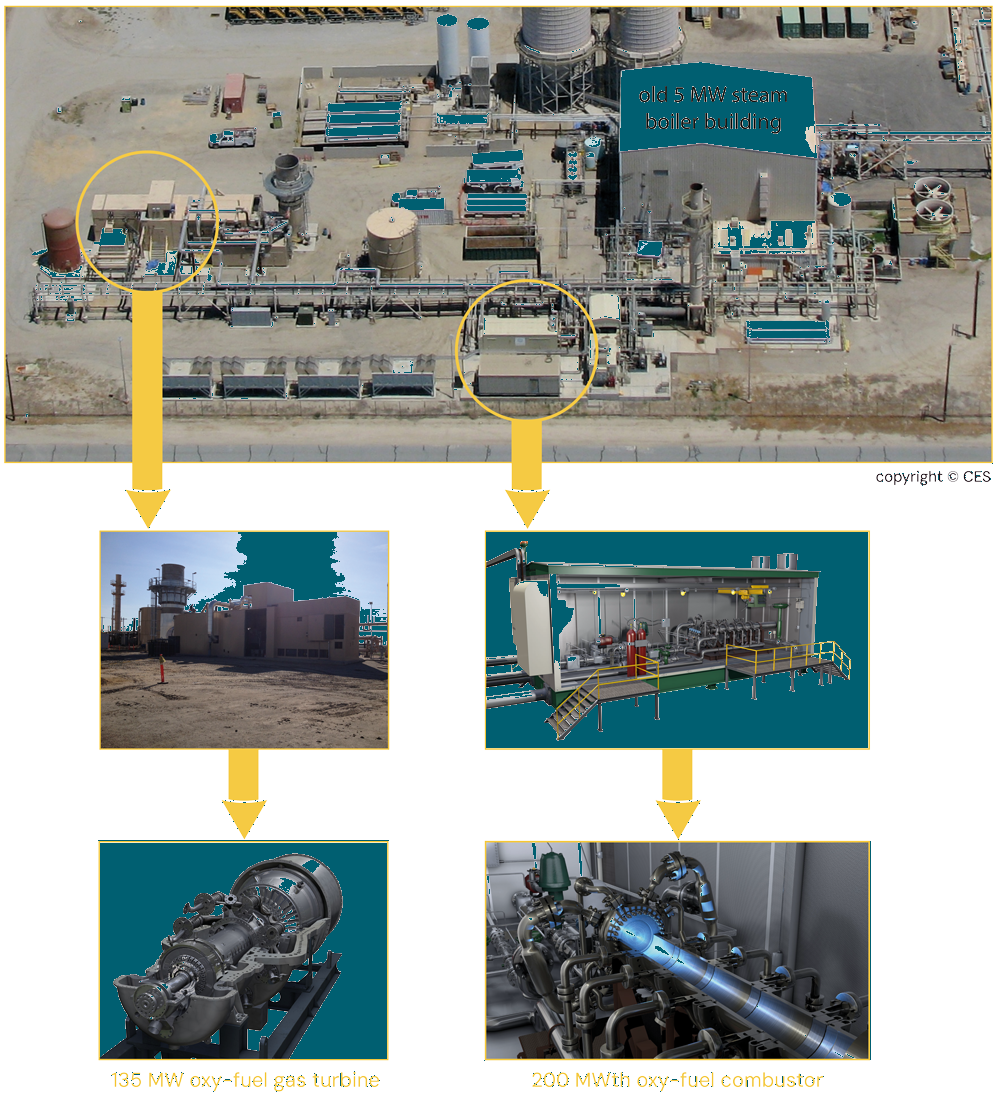
The CES OxyFuel combustor technology has been operational since 2004, is commercially insurable, and has been refined over more than 15 years with an investment of over $150 million.
Zero-emission products
Because all CO₂ is sequestered, the power and incremental oil produced are classified as zero-emission, enabling verified carbon credit generation alongside commercial production.
How a TriGen OxyFuel CCS plant works
Four integrated steps transform fossil fuels into clean energy, captured CO₂, and additional value streams.
Air Separation
An Air Separation Unit (ASU) produces the pure oxygen required for OxyFuel combustion, also generating saleable pure Nitrogen and Argon.
OxyFuel Combustion
Hydrocarbon fuel is combusted with pure O₂. The combustion products are a concentrated CO₂ and H₂O stream, CO₂ capture happens in this single step.
Power Generation
The heat and pressure generated are converted to electricity via steam turbine or super-critical CO₂ cycle, producing clean, reliable baseload power.
CO₂ Storage & EOR
CO₂ is compressed and delivered at reservoir conditions for permanent underground storage or enhanced oil recovery, generating carbon credits and incremental oil production.
CO₂ EOR: monetising storage as production uplift
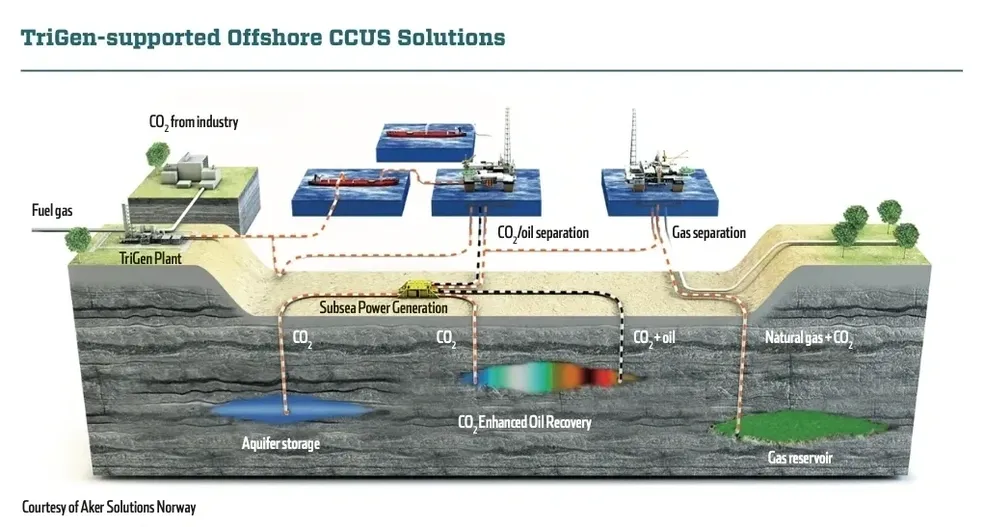
In mature producing fields, CO₂ captured by the OxyFuel process is delivered directly to the reservoir for Enhanced Oil Recovery (EOR). CO₂ EOR has been practised commercially since the 1970s and is well understood by major oil producers.
TriGen's OxyFuel process delivers CO₂ at exactly the composition and pressure conditions required for miscible EOR, avoiding the costly recompression and conditioning steps that make CCS-for-EOR uneconomical with post-combustion capture technologies.
This creates a dual economic benefit: the oil producer receives a CO₂ EOR uplift (typically 5-15% additional recovery factor) while simultaneously sequestering CO₂ and generating verified carbon credits.
Maintaining our advantage
TriGen's strategic partner, SINKO-ID, provides an R&D and test facility located adjacent to a pipeline corridor to facilitate TriGen's development of efficiency and cost improvements. Two such projects are TwistR and HyAPC.
TwistR is technology, first operationalised by Shell 20 years ago, to dry and recover NGLs from natural gas. It is now being developed to capture CO₂ from (flue) gasses.
HyAPC (High-performance oxy-fuel Advanced Power Cycle) is a promising next-generation oxy-fuel technology.
HyAPC represents TriGen's commitment to maintaining a technology leadership position as the OxyFuel CCS market matures and scales.
Discuss R&D partnerships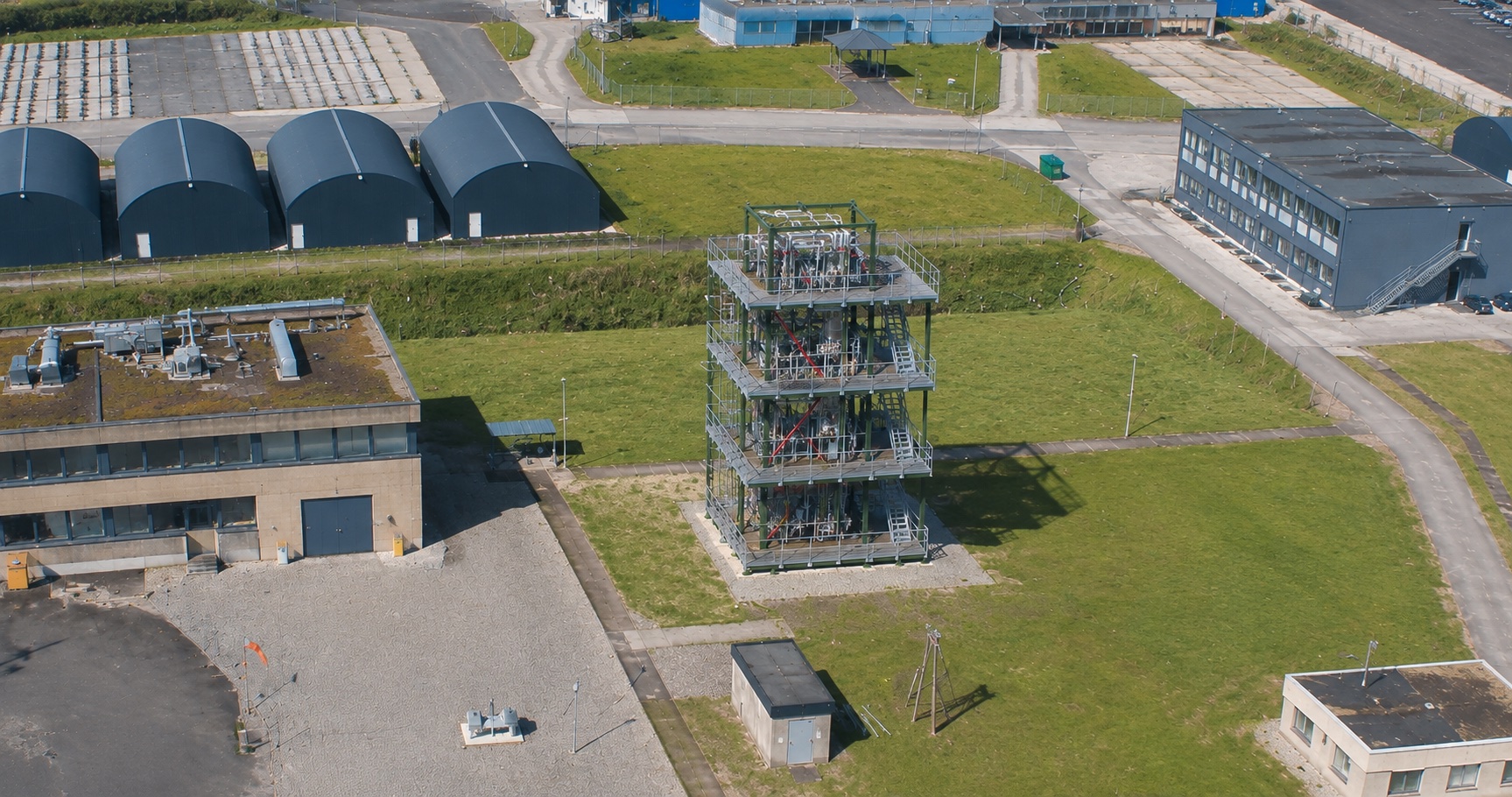
Ready to explore a TriGen project?
We work with O&G operators, investors, and EPC partners to develop tailored OxyFuel CCS solutions for specific asset portfolios.